
Inaugural Report
From the beginning through Fiscal Year 2026, ended June 30, 2026
Shelburne, Vermont
From the beginning through Fiscal Year 2026, ended June 30, 2026
Shelburne, Vermont
Executive summary
A 1988 Village Plan. A complete streetscape design for Falls Road in 2008 — twenty-nine sheets of layout, lighting, landscaping, and specifications. Pedestrian and cyclist safety on Bay Road, studied multiple times across two decades. A 2019 plan to catalyze Rice Lumber. A 2021 economic development report that urged the Town to pursue downtown designation.
What Shelburne lacked was an organization whose standing mission was to carry such things forward.
Shelburne has rarely lacked good plans. A comprehensive 1988 Village Plan offered bold ideas that might have forestalled many of the issues we face today.1 In 2008 the Town commissioned a complete streetscape design for Falls Road. Pedestrian safety on Bay Road has been studied and planned multiple times across two decades. A 2019 plan was made to catalyze Rice Lumber development through a shared infrastructure agreement with Healthy Living.
A 2021 economic development report recommended that the Town not chase conventional suburban commercial growth, but rather strengthen its identity through placemaking, curated retail, food and beverage, recreation, and walkable mixed-use environments — the “destination magnets” that draw repeat visits while improving everyday quality of life. That report also urged the Town to pursue Vermont downtown designation.2
What Shelburne lacked was an organization whose standing mission was to carry such things forward — to keep asking, to convene the people who could act, and to be ready when a window opened. That too was in a plan, in this case a recommendation for a town economic development committee in the 2019 Town Plan.
Experience Shelburne was chartered by the Selectboard in January 2025 to be that organization. This is the organization’s first report, covering the whole of its life so far: the years of diagnosis that preceded it, the founding period through mid-2025, and its first full year of operation, which closed on June 30, 2026.
In its first fiscal year Experience Shelburne made significant progress on multiple fronts. An economic and market feasibility study of the fifteen-acre Rice Lumber site was completed, and the committee is now in active discussion with adjacent landowners and stakeholders. Bay Road got immediate improvements and a funded scoping study for more through the Chittenden County Regional Planning Commission, with a funded second scoping study for the LaPlatte Bridge to commence shortly.
The prerequisites for the downtown designation application — the 2021 recommendation — have been completed and the application goes to the State this summer, along with a downtown investment plan that resurfaces that long-dormant 2008 streetscape design.
Rather than planning and waiting, we adopted an approach captured in six words: think big, start small, learn fast.
Experience Shelburne took stewardship of the Shelburne Farmers Market when its founding organization could no longer carry it, and is guiding a 23-week season with more than 175 approved vendors, a reengineered operating model, and a path to financial sustainability. Volunteers built a comprehensive commercial property inventory. And, in collaboration with the Shelburne Museum, Experience Shelburne catalyzed a business-community program to bring Winter Lights into the village.
Rather than planning and waiting, we adopted an approach captured in six words: think big, start small, learn fast. We laid out a comprehensive long-term vision and strategy in collaboration with the Selectboard and Town staff, with significant community input. We harnessed volunteer energy and expertise to make opportunistic, meaningful short-term progress in high-value areas.
We also learned about ourselves. What produced this year’s results was the ability to act between meetings, and the projects that moved fastest were the ones where that capacity was strongest. We learned too that support comes more readily for visible projects than for the capacity that makes those projects possible.
Both point to the same conclusion. Shelburne is not short of ideas, opportunities, or expertise. What sets our pace is capacity to execute, and capacity is something an organization can build.
Something less tangible changed as well. Doing what we said we would do, and being seen to do it, has begun to change how Shelburne reads to the regional and state bodies whose cooperation most of this work requires. That standing is itself an asset the town did not have a year ago.

Section two
A Town committee and a nonprofit corporation, sharing a mission, a leadership, and a name.
At its 2024 strategic retreat, the Selectboard created a working group to jumpstart the Town’s economic development efforts. Co-chaired by Selectboard members with Town staff and Finance Committee volunteers, the group studied how comparable communities organize economic development, sought stakeholder input, and proposed a structure: a Town committee to advise the Selectboard, paired with a nonprofit able to raise funds and implement programs.
The Selectboard adopted the proposal and chartered the committee in January 2025.3 By April more than twenty volunteers were at work on mission and structure. Experience Shelburne Corp. was incorporated in May, and the charter and bylaws4 were approved on June 25 — six days before the first fiscal year began.
The scope is community and economic development, for Shelburne as a whole. We view our stakeholders as encompassing residents, businesses, and visitors. Our goal is not growth for its own sake, but rather for the sake of character, fiscal vitality, and environmental integrity. Our strategy aims for the overlap shown below: work that serves all three stakeholder groups and meets all three criteria at once.
The Shelburne Farmers Market5 and Winter Lights6 serve residents, enhance business and attract visitors. A mixed-use development, done well, houses new residents, meets resident and visitor needs, and enhances character and fiscal vitality. We take the whole town as the unit — which is why this report moves between markets, development sites, infrastructure, lighting, and historic buildings without changing subject.
For future generations
Standing
The Town’s Community and Economic Development Committee, chartered by the Selectboard. Fifteen to twenty-one members, including four voting ex officio members: the Town Manager, the Planning Director, the Chair of the Finance Committee, and a Selectboard member. Apart from the Town staff members, the committee is made up of community volunteers. It meets monthly.
Its asset is standing: it advises the Selectboard and convenes the town.
Ability to act
Experience Shelburne Corp., a 501(c)(3) whose board is the committee’s Executive Committee under a different authority. It is the execution arm: it can raise money and then operate like a business, forming partnerships, retaining consultants, and engaging contractors.
Its asset is the ability to act — including between meetings.
The committee brought together a cross-section of Shelburne: the Selectboard and senior Town staff; the leaders of Shelburne Farms, the Shelburne Museum, and Wake Robin, among the town’s largest attractions, employers, and taxpayers; business leaders from the Shelburne Country Store, Union Bank, and the Shelburne Shopping Plaza; and residents drawn from neighborhoods across town and across age groups, a number of whom had never before served on a town committee.7
The Advisory Board reaches wider still, to residents who serve in the Vermont House and Senate, the Shelburne Historical Society, the Champlain Valley School District, and across industry sectors.8 It is not honorary. We call on it for strategic review — the Rice Lumber findings were stress-tested by advisors before we finalized them — and for the relationships that help Shelburne be heard.
When we needed to understand where the LaPlatte bridge crossing sat among the Chittenden County Regional Planning Commission’s priorities, an advisor made the call. That is not leverage. It tells a regional body that a request is coming from a town that is organized and will follow through.
Experience Shelburne brings together a cross-section of the community that had rarely sat at a single table.
Section three
Our mission, our community’s input, and the three lists that turn a long-term vision into this year’s work.
Our mission
We spent the first several months engaging the community and building the organizational foundation. We established the Town committee, secured 501(c)(3) tax-exempt status for the partner nonprofit, recruited more than thirty enthusiastic volunteers and advisors, articulated our mission, developed unifying brand positioning, launched the experienceshelburne.org website, and created a communications toolkit.
Experience Shelburne did not begin with a blank page. In 2021 the Town commissioned an economic development study built on thirty-seven interviews with eighty-six residents, business owners, farmers, developers, real estate agents, nonprofit and school volunteers, and Town officials — anyone, in the consultant’s definition, who lived, worked, or invested in Shelburne.10
Each was asked what good economic development would look like in five years, what assets the town had to get there, what stood in the way, and who else should be consulted; each received a summary of their own interview to correct. Several of the recommendations this report describes as current work — downtown designation, placemaking and wayfinding, and a proactive body working alongside Town government — are that study’s, drawn from those eighty-six conversations.
The organization’s own design was built the same way and reviewed in public. The Selectboard’s 2024 working group conducted roughly twenty one-on-one interviews and brought its proposed structure to the Selectboard in open session more than once before the committee was chartered. A column in the Shelburne News that April explained the new organization and asked residents to volunteer.11
Through fiscal 2026 we kept asking. The brand and positioning project ran five focus groups drawn from distinct parts of the community — residents, businesses, agriculture, Town staff, and elected officials — alongside individual interviews.
In September 2025 we updated the Selectboard in public session and said what we would do and by when: explore long-range goals in October, reconcile them with existing Town plans through November, take the result to the community from November through January, and return in February with priorities. Each of those happened on schedule.
Other channels are continuous. The committee meets on the fourth Wednesday of every month at the Town offices, open to the public, with agendas and minutes posted to the Town calendar. Surveys for feedback, for volunteering, and for the mailing list have stayed open since January. Since the market season opened in May, our volunteers have staffed a booth at the Shelburne Farmers Market every Saturday, allowing for informal engagement with hundreds of residents each week. And, members have actively engaged on Front Porch Forum with 20+ postings and responses.
Setting aside the 2021 study, more than 250 people have taken part in an interview, a focus group, a survey, or a community session since this work began.


Our strategy and approach are embodied in three to-do lists, read from the future to today.12
We plan this way
This year
One to three years
A decade and beyond
We work this way
Each list is derived from the one to its right — the decade decides what belongs in the year — and then executed from today forward.
Completed in fiscal 2026
Targeted, long-term outcomes allow us to recognize an opportunity when it appears and to act before the window closes.
Our Third List sets out the long-term outcomes we want to achieve. These were developed over a series of visioning sessions, augmented by committee analysis and Selectboard discussion: a vibrant historic downtown anchored by an enhanced market plaza and connected to the Vineyard, Fiddlehead, Folino’s, and Vermont Teddy Bear; a robust economic spine along a beautified Route 7, with performing arts, cultural offerings and visitor lodging; diverse resident housing in growth districts; a robust Village North that anchors the northern end of town; a holistic Shelburne Bay District that leverages the synergies the wastewater project enables; a comprehensive, town-wide bike and pedestrian network; and a thoughtfully planned Lake District spanning Harbor Road, Shelburne Farms, Meach Cove, and adjacent lands. Few of these outcomes can be completed in less than a decade; they exist to keep shorter-term choices pointed in the right direction.
Our Second List holds our mid-term one- to three-year priorities, derived from the Third List and reassessed annually: targeted commercial property development including Rice Lumber; placemaking, signage, and parking; food, retail, and hospitality recruitment; a four-season visitor strategy; synergies with the Bay District wastewater project and other public works; a Town property and asset inventory; Town Plan input and TIF/CHIP analysis; visitor experience and co-marketing; and the organizational capacity to sustain all of it.
Our First List contains our annual projects, with names, milestones, metrics, and deadlines that drive progress. Three of this year’s projects were opportunity-driven. The Town’s $38 million wastewater project was going to open much of Bay Road, and pedestrian safety was already on our lists. The Town was already funding holiday lighting in the village, and a four-season visitor economy was on our lists, so the same expenditure began to look like the seed of a winter program. When Act 181 consolidated Vermont’s designation programs, downtown designation had been on our lists since the 2021 report recommended it, and we were positioned to apply at the advanced tier rather than beginning to consider it.
Experience Shelburne created none of those three openings. Each might well have passed unremarked a year earlier. That is what a Third List is for. Targeted, long-term outcomes allow an organization to recognize an opportunity when it appears and to act before the window closes.
Shelburne is not short of ideas, opportunities, or expertise. What sets our pace is capacity to execute.
Section four
Six areas, drawn from the First List and reconciled with the Town Plan and the Selectboard’s priorities.
Project area one
The Shelburne Farmers Market, and the beginnings of a winter season in the village.
In the fall of 2025 the Shelburne Business and Professional Association, which founded the Shelburne Farmers Market in 2006 and ran it for nearly twenty years, told the Selectboard that the farmers market had outgrown what that volunteer association could sustain. With Selectboard approval, the market transitioned to Town ownership and Experience Shelburne management.13
Neither party could have done this alone. The Town could accept ownership of a community asset but could not run it as a business. A private organization could have run it but had no standing to receive it. The transfer worked because the two halves of Experience Shelburne could act together, and it was completed in a single season.
Taking on the market meant deciding what it is for. Rather than treat it as a commercial venue, we leaned into its civic potential. Its revamped purpose: “Uphold a vibrant space where local agricultural producers and businesses welcome residents and visitors to explore, contribute to and enhance the best of Shelburne.”


To fulfill that purpose, the market also needed to become a sustainable, enduring operation. The Selectboard was clear that the Town could not subsidize its operation. We reengineered its inventory, scheduling, collections, and management processes and rebuilt its underlying systems.
We are in the midst of a 23-week season with an increase in vendors, visitors, and sponsorships, and on a path to positive financial results. Some of these proceeds will help fund improvements to the Parade Grounds electrical and WiFi capabilities.
The market in figures

Winter Lights has drawn more than 50,000 visitors to the Shelburne Museum each winter since 2021. The question we took up was whether more of those visitors could be drawn into the village and help drive a more robust winter season for local businesses.
That depended in large part on a chicken-and-egg question: whether enough village businesses would “light up” and stay open on winter evenings to make the trip worth a visitor’s time. To help catalyze the evolution, Experience Shelburne facilitated a three-party agreement with the Museum and the New England Holiday Light Company under which any Shelburne business can opt in, paying for its own lighting but with significant group buying discounts.
Within weeks of a June organizational meeting, 24 businesses and organizations had requested quotes, among them Vermont Teddy Bear, Shelburne Vineyard, Fiddlehead Brewing, Union Bank, Fig, Shelburne Craft School, Ark Veterinary, Sweeney Design Build, and the Shelburne Country Store. We thought big and believe there is enough interest to start small, and hope to have the first phase of a Winter Lights, Village Nights program this December.14
What changed this year was not the size of the Town’s long-standing commitment to village holiday lighting but its connection to a larger purpose. The same expenditure, tied to a winter visitor strategy and matched with private participation, begins to do economic work it had never been asked to do.

Project area two
A 1.7-mile corridor with no sidewalk, a $38 million wastewater project, and a window that does not stay open.
Bay Road carries roughly 3,000 vehicles a day along its 1.7-mile stretch, no part of which has a sidewalk or shoulder for pedestrians and bicycles. The road is a critical artery for residents, a primary transit route to the Shelburne Community School and multiple neighborhoods along Harbor Road, and a gateway for visitors to several of the State’s most visited attractions, such as Bay Park and Shelburne Farms.
Shelburne Farms was recently named by HGTV as the best free attraction in Vermont and receives more than 150,000 visitors a year, many of whom arrive via Bay Road.
This is not the first time the corridor has been studied. Scoping studies were completed in 2010 and again in 2017. Both were competent pieces of work. Neither resulted in any pedestrian infrastructure being built, in part because nothing forced a decision on any particular date.

Bay Road, fiscal 2026
That changed with the Town’s $38 million wastewater project, which will run along Bay Road from the Ti-Haul Trail to Crown Road — much of the road’s length, and more of it at one time than any effort in a generation. The surface for a significant portion of the road has to be restored when the work is done, a cost the project carries regardless, so the added cost of restoring it in a way that also serves people on foot is far smaller than the cost of returning to do the same work on its own.
Because pedestrian safety was already on our lists, we could see that schedule as the least expensive chance in a generation to make progress on Bay Road. Through Experience Shelburne’s focus, the speed limit came down from 35 to 25 mph, pedestrian-activated warning beacons went up at the LaPlatte Bridge crossing, the Chittenden County Regional Planning Commission began a $63,267 multimodal scoping study of the corridor,15 and a funded companion study for the LaPlatte Bridge, estimated at $40,000, is now being organized.
The commission funds both studies at 80 percent, with the Town covering the balance — roughly $103,000 of study work for about $20,700 in local funds.
What that progress looks like is the question the multimodal scoping study is meant to answer, and we expect it to come back in two parts. Continuous sidewalks and separated paths along the corridor are long-term potentials, on a timeline measured in years. The near-term opportunities are smaller and available now: resurfacing the force main trench between the railroad underpass and Crown Road in a way that improves pedestrian access and safety, and measures that need little or no excavation — striping, signage, pedestrian crossings, and traffic calming through narrowed lanes and speed tables.
The study’s long-term recommendations may not align with the location or the surface chosen for that cap, which is acceptable given how long a permanent solution takes to design, permit, fund, and build. A near-term improvement will have served pedestrians for years in the meantime.
This is what think big, start small looks like on a single road.
A resident who has watched previous studies come and go might reasonably ask why the current ones will end differently. The wastewater schedule is one answer: it puts a price on delay that did not exist in 2010 or 2017. The other is that there is now an organization whose standing task is to catalyze the work — to convene the parties, crystalize the projects, pursue the funding, and keep asking.
No private group, however well funded or well intentioned, can lower a speed limit, install beacons in a public right of way, or shape a regional planning commission’s work program. Those things require the Town, which has held that authority throughout, including in 2010 and in 2017. What was added this year was an organization able to ask persistently, convene the right people, and act between meetings.
The difference is not the quality of the study. It is that someone is now responsible for what happens after it.


2004

2010

2017

2024
Project area three
The Town Plan, the Unified Land Development Regulations, and the Town’s first working inventory of its commercial property.
Members contributed to the Planning Commission’s rewrite of Shelburne’s zoning into Unified Land Development Regulations, with significant effort devoted to meeting the need for attainable housing through inclusionary requirements without dampening the economic viability of new development in Shelburne.16 A project team is also contributing to the drafting of a new community and economic development chapter for the Town Plan update.17
What began as a summer intern’s project became the Town’s first working inventory of its commercial property: 19 parcels across 194 acres, 53 of those acres vacant, with ownership, assessed value, acreage, infrastructure details, and a development opportunity score for each parcel. It gives the Town a comprehensive database from which to answer prospective developer inquiries.
The commercial property inventory

Project area four
Fifteen acres at the northern gateway to the village, and an answer we had hoped would be rosier.
We completed an economic and market feasibility analysis of roughly fifteen acres at the northern gateway to the village and issued an interim report in June, with due diligence assistance from Harmonie Park Development, Wagner Hodgson Landscape Architecture, and Civil Engineering Associates. The study tested the market and technical feasibility of several scenarios using building blocks: market-rate and missing-middle housing, a specialty grocer or market hall, a community aquatic center, fire and rescue facilities on the Town’s parcel, and the streets and greens to tie them together.18
The Town is already invested here. In 2021 Shelburne acquired Lot 6A, about 2.23 acres at the heart of the site, through a voter-approved bond of roughly $1.12 million, with municipal use in mind.19 About $470,000 of that reflected the Town’s share of infrastructure that was to be built jointly with neighboring private development, an arrangement that did not proceed once the private plans it assumed were postponed.
The Town’s ownership remains a genuine asset and gives Shelburne a real voice in what the site becomes. The site itself has sat cleared and empty at the gateway to the village for more than a decade.
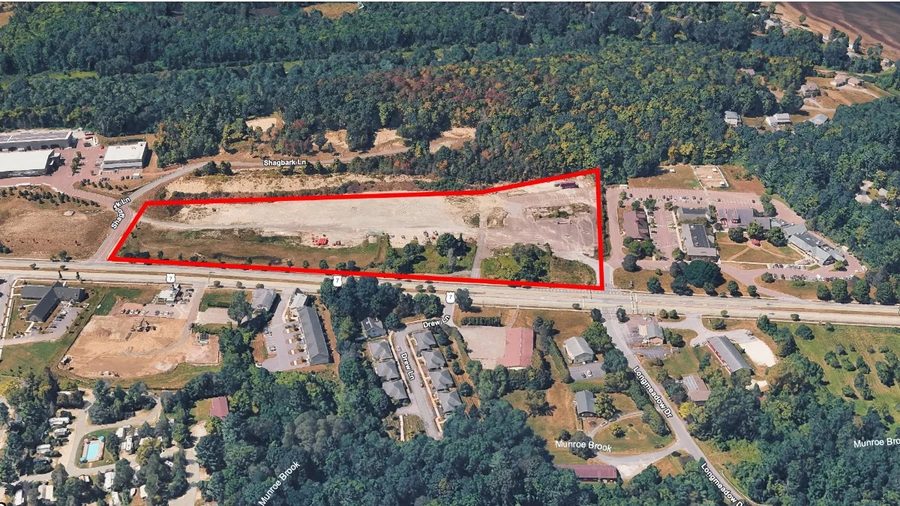
Going in, the appeal of tying fire and rescue facilities to a larger effort was the possibility that economies of scale, and new value created by the market pieces elsewhere, might offset or even subsidize the cost of a station. We looked for that and did not find it. If anything the finding ran the other way: the market pieces cannot carry their own costs without help, so there is no private surplus to draw on for public safety.
Market-based development faces real headwinds on this site. Vermont construction economics, together with the site’s bedrock, slope, and infrastructure demands, push costs to the edge of what private rents and sales can support.
Rice Lumber and the adjacent Shelburne Commons would be more effectively planned as a single district than as two developments, because neither has the critical mass to become a village center alone, and a standalone retail center on Rice would consume close to half the site while splitting demand between two competing properties.
The civic uses that would give the site its purpose — attainable housing, a community gathering place, fire and rescue — are precisely the ones private capital will not fund.
That finding is sobering, but it is also clarifying, and it changed what we are doing. The qualities that make the site difficult to finance privately are the same ones that make it eligible for state, federal, and philanthropic support.
We are now engaging adjacent owners and option holders to understand their intentions, testing which public and philanthropic tools could apply, and exploring the non-financial contributions the Town can make — permitting efficiency, the best use of its own parcel, and the financing tools available under Act 181. None of these steps commits the Town to anything it cannot revisit.
We had hoped for a rosier answer, but the sobering answer clarified and changed what we are doing.
Project area five
A designation application, three historic Town buildings, and a 2008 design set waiting for its moment.
Act 181 of 2024 consolidated Vermont’s five legacy designation programs into a single Community Investment Program. Shelburne is applying for Step Three, the advanced tier — the recommendation the 2021 report made. The Selectboard has designated Experience Shelburne as the Town’s center managing organization.
We have completed the long list of prerequisites for the application and it goes to the State this summer.20 A Step Three center receives the benefits of all three tiers21, and that list reads like a funding source for much in this report.
What a Step Three designation brings

Designation would arrive at a useful moment, because the Town is already deep into the largest historic renovation effort in its recent history.22 Three Town-owned buildings on the National Register need substantial work.
The Town selected architects in February and received a draft assessment in June — water infiltration, roof replacements, masonry repair, envelope work, aging mechanical systems, and a bell tower that shakes when the bell rings. Ahead lie a construction manager, a phasing plan, a bond vote, and significant fundraising efforts.
That future is central to our work: these are the buildings a visitor photographs, the rooms the town meets in, the library people use, and three of the largest historic structures in the designated district.

Town Hall, 1927
Its 2019 addition houses the Pierson Library.

Village School, 1926
Now the Town offices.

Pierson Building, 1816
The oldest of the three.
Four planning efforts have been undertaken over the last twenty years to improve the historic downtown,23 including a substantially complete 2008 design set for Upper Falls Road from U.S. Route 7 to Church Street. It was never constructed. This June we revived the effort — walkable space, sidewalks, street lighting, landscaping — coordinated with planned water main work so construction happens once rather than twice, and an RFP for design services building on the earlier work is in preparation. The 2006, 2008, 2012 and 2016 work was not wasted; it was waiting for a moment when it could be built, and the water main schedule is that moment.
Project area six
The capacity that made the other projects possible.
Some of this work appears on no project list, because it is the capacity that made the other projects possible. The farmers market’s systems were rebuilt from the ground up. The commercial property database is the first the Town has had. The three-list framework now governs how we choose work and how we set it down.
The brand and positioning work was the largest of these efforts. Shelburne has several strong identities — the Town, Shelburne Farms, the Shelburne Museum, Vermont Teddy Bear — but no shared one a business, an organization, or a resident could use to signal a common connection to the town. We set out to develop an umbrella brand, distinct from Town government, that could bridge those identities rather than compete with them.
Through an open RFP we retained two regional firms: OverUnder for brand design and Libretto for positioning strategy. The work ran from the summer of 2025 through November. It produced a positioning statement, a narrative and targeted messages, a visual identity, the experienceshelburne.org website, short videos, and a communications toolkit now used by committee members and partners.
Community volunteers built the website on the design the firms provided, and contributed technical expertise and local knowledge that held the cost down. At $20,460 this was the second-largest expenditure of the fiscal year.

Section five
Fiscal year 2027 and the two years after it offer great promise.
Several efforts that took a year to position are coming to fruition, and now have the potential to move quickly and scale. The downtown designation application goes to the State, and an anticipated approval will bring new downtown improvement flexibility and opportunities — and also new planning, administrative, and reporting requirements.
The wastewater project proceeds along Bay Road, and the scoping study will produce recommendations on two horizons: immediate actions tied to the construction schedule, and longer-term corridor improvements. An RFP for downtown streetscape design services goes out, timed to water main work so that Falls Road is rebuilt once rather than twice.24
The three historic Town buildings move from assessment toward a construction manager, a phasing plan, a bond vote, and a fundraising campaign. The Rice Lumber conversation moves from analysis toward master planning. Winter Lights | Village Nights aims at a first December launch. The farmers market completes its first full season under Experience Shelburne management and launches its second, with mission-driven innovations learned from the first.
At the same time, we intend to step back. Our Third List was drafted in our first year, in conversation with the Selectboard, Town staff, and the community, and we will revisit it based on our on-the-ground learning and an evolving picture of what Shelburne can become. A vision is never finished. It needs to evolve and be continually synthesized into a Second List of mid-term priorities and a First List of projects with names, milestones, metrics, and deadlines.
Several efforts that took a year to position are coming to fruition, and now have the potential to move quickly and scale.
Most of the work itself was done by volunteers, supported part-time by Town staff, and the involvement varied widely. A small number of people gave the equivalent of a quarter to a third of a full-time job. Others worked weekly on a project team, others monthly, and others on call when their particular expertise was needed. Senior Town staff contributed significant time as well, particularly the Town Manager, the Finance Director, and the Planning Director.
That model has a known limitation. Town committees generally operate on a meeting-to-meeting cadence. Members understand themselves as advisors: people who convene, deliberate, offer a recommendation, and adjourn until the following month. Very little happens in between. This is not a failing of any particular committee or any particular volunteer. It is the ordinary shape of civic service, and it goes a long way toward explaining why so many sound plans end up on a shelf.
Experience Shelburne was built to work differently, and for the most part it has. The 501(c)(3) corporation gives us an execution arm that can act between meetings — sign agreements, retain contractors and consultants, operate a market. We organize around project teams rather than agenda items. And the volunteers who came to this work arrived excited to create outcomes rather than to advise.
That is the honest limit of the present model. Between-meeting work from a volunteer can be invited and hoped for, but it cannot be assigned, and it competes with the job and the family that have the first claim on that person’s week.
Cannot be purchased
Experienced business leaders, a development finance executive, a state economist, bank and institutional leaders — people who have built things in this state and know how it works.
Can be
The work that surrounds that judgment. We have been spending scarce volunteer hours on the second kind, and that is one of two organizational development lessons we carry into next year.
Volunteers who came to this work arrived excited to create outcomes rather than to just advise.
A second lesson appeared on the funding side. Contributors gave more readily to specific, visible work — the farmers market, its music program, the Rice Lumber analysis — and far less readily to general operating support. The capacity to run projects is the hardest thing to fund; the projects that capacity produces are the easiest.
The people and funding available for our projects depend on a choice about the organization itself, and that choice is not ours alone to make.
This costs our community almost nothing beyond the Town’s appropriation of staff time and programming dollars, and it preserves an organization that has proven it can move. Its limitation is the one described above: our pace would continue to be set by how much discretionary time our volunteers can find.
Several neighboring communities, such as Burlington and South Burlington, have Economic Development officers as part of core municipal operations.25 Shelburne’s budget constraints and its staff’s existing workload limit this option, and it is not clear that Shelburne’s size yet warrants such a function.
An executive director, development staff, and an annual fundraising campaign. Organizations of this kind can be effective, and many communities are well served by them. They are also separate from the town government they work alongside, and a significant share of their energy goes to sustaining themselves.26
Working in concert with the Town and volunteers: a director able to engage Town department heads as a peer, at the cadence of a Town Manager’s week rather than a committee’s month, and a community engagement specialist facing outward to residents, businesses, and partners. These core members would not replace volunteers or Town staffing; they would leverage and amplify both.
We do not present these four paths as equally likely, and we are not in a position to unilaterally choose any other than to continue as we are. We lay them out as a marker for the key organizational development issue we intend to explore in the coming months.
The fourth path differs from the others in one respect: it would depend on multi-year commitment secured in advance rather than on annual Town budgeting or public fundraising, because people of the caliber this work requires do not leave secure positions for a role funded twelve months at a time.
Section six
Figures cover fiscal year 2026, July 1, 2025 through June 30, 2026.
Experience Shelburne draws on three sources of funding: the Town’s annual community and economic development budget appropriation, private contributions to Experience Shelburne Corp., and revenue from the programs the corporation operates. Because the committee and the corporation share a mission and a leadership, the money is planned and spent as a single effort. The figures here do not include Shelburne Farmers Market operations, which are reported with the market’s first full season in fiscal 2027.
Town appropriation. The Town’s fiscal 2026 community and economic development budget was approximately $68,000. Part of it funded committee-directed work carried out through the corporation; the remainder covered other Town economic development spending that the committee did not direct.
Private contributions. Experience Shelburne Corp. received $53,800 in private contributions during fiscal 2026, recognized by partnership level under Our contributor partners.
Program revenue. The corporation took over management of the market for the 2026 season, which opened on May 16, 2026. Only seven of twenty-three market Saturdays fall inside fiscal 2026, so the first full season of results will appear in next year’s report. We anticipate the market will finish better than break-even.

| Rice Lumber analysis and due diligence | $ 37,500 | |
|---|---|---|
| Strategic brand, positioning, and communications collateral | 20,460 | |
| Community briefings and outreach | 10,960 | |
| Summer interns | 6,337 | |
| UVM Farmers Market due diligence | 4,800 | |
| Shelburne Farmers Market | 0 | |
| Legal fees | 4,846 | |
| Administrative support and materials | 1,213 | |
| Total | $ 86,116 |
Experience Shelburne Corp. held $26,250 in cash on June 30, 2026. The figures in this report were prepared internally and have not yet been audited.
The appropriation did not fund all of the year’s committee-directed work. Private contributions covered a meaningful share of it, which is the practical case for having a corporation alongside the committee: what the committee could take on was not limited to what the Town alone could fund.
Contributions received. Of the $53,800 raised in fiscal 2026, $10,485 was designated by donors for general Shelburne Farmers Market support and $4,505 for the market’s music fund. The remaining $38,810 was designated for other committee priorities.
Designated gifts are recorded as revenue when received and spent as their purpose is met. Because the market’s first full season falls in fiscal 2027, most of that designated support will appear as market spending in next year’s report rather than in the figures above.
That is also much of what the $26,250 in cash at year end represents: designated market support carried into fiscal 2027, not unrestricted reserve. The corporation carries no debt and holds no endowment.
| Winter Lights | Village Nights and winter programming | $ 50,000 | |
|---|---|---|
| Economic planning and development | 40,000 | |
| Business recruitment and enhancement | 25,000 | |
| Community development and placemaking | 25,000 | |
| Visitor experience and co-marketing | 25,000 | |
| Community events and cultural programming | 25,000 | |
| Shelburne Farmers Market | 0 | |
| Total | $ 190,000 |
The Town’s appropriation for community and economic development in fiscal 2027 is $190,000. Of that, $50,000 was a previous budget expenditure on holiday lights, now directed to Experience Shelburne for Winter Lights | Village Nights. Unlike the prior year, the fiscal 2027 budget is explicitly overseen by the Town committee and executed by the 501(c)(3) corporation.
Fiscal 2027 will be the first year the Shelburne Farmers Market appears as a full season of operations, reported with next year’s figures.
The market is budgeted at zero because it is expected to cover its own operating costs.
Experience Shelburne Corp. is a 501(c)(3) tax-exempt organization, EIN 39-2780940. Contributions are tax-deductible to the full extent permitted by law, and are disclosed in this report by partnership level rather than by amount.
The corporation’s exemption is effective May 6, 2025, its date of incorporation. The IRS issued its determination on November 24, 2025, but we never received it, and only learned of the approval in May 2026 after requesting a copy. Until then, contributions were received by the Town and held in a restricted account for the committee. Those are gifts to the Town, and donors should look to the Town for any deduction.
In-kind support. Donated staff time, facilities, and professional services are recognized under Our contributor partners at the level reflecting their estimated value. This report does not attempt to place a value on volunteer time or on Town staff time, though both exceed the figures shown here.
Several contributors listed are affiliated with members of the committee, the board, or the Advisory Board, and one committee member also serves on the Selectboard. Another Selectboard member chairs the Advisory Board.
All committee members are subject to the Town of Shelburne’s Ethics and Conflict of Interest Ordinance. Members serving on the Selectboard, the Development Review Board, or other quasi-judicial bodies do not solicit contributions from anyone with a matter pending before that body. Contributions support public-benefit programs and do not influence permitting, procurement, or policy decisions.
Experience Shelburne is supported both by financial contributions and by donated goods, services, and time. Partners are recognized at the level reflecting their total annual support as of June 30, 2026, including support given through programs such as the Shelburne Farmers Market.
No contributions at this level in fiscal 2026.
Primarily staff assistance and use of facilities.
Primarily staff support and resources for custom website, marketing, communications and business systems development.
Contributions at every level are welcomed and appreciated. Every gift helps strengthen the community we share.
Gifts designated for the Shelburne Farmers Market and its music program are included at the levels shown.
The work described in this report was done by community volunteers, supported part-time by Town staff. Rosters are as of June 30, 2026. Four voting ex officio members serve on the committee: the Town Manager, the Planning Director, the Chair of the Finance Committee, and a Selectboard member.

Carmone Austin
Owner, Shelburne Country Store

Meagan Buckley
CEO, Wake Robin

Patricia Carpenter
Treasurer. Deputy Town Manager and Finance Director

Jeff Carr
Secretary. President, Economic and Policy Resources

Aaron DeNamur
Planning Director, Shelburne

Tom Denenberg
Vice Chair. Director, Shelburne Museum

Kate Elliott
Sustainability executive; Equity and Diversity Committee

Arthur Friedman
Of Counsel (retired), Sheppard Mullin

Joan Goldstein
Vice Chair. CEO, Vermont Economic Development Authority

Stephen Kendall
EVP, Union Bank; Chair, Planning Commission

Kate Lalley
Representative, Vermont House (Chittenden-6)

Matt Lawless
Town Manager, Shelburne

Chunka Mui
Chair. Futurist and innovation advisor; Selectboard

Don Porter
President, J. Donald Porter & Company

Brian Precourt
President, Precourt Investment

Mary Anne Sheahan
Chief Talent Officer, Vermont Business Roundtable

Bill Shouldice IV
Commissioner, Vermont Department of Taxes

Matt Sleeman
Actuary, John Hancock Financial

Jeff Trussell
Creative Director, Lot7 Media

Alec Webb
President, Shelburne Farms
The Board of Directors of Experience Shelburne Corp. is the Executive Committee of the Community and Economic Development Committee, together with the chair of the Advisory Board.
Chunka Mui
Chair
Tom Denenberg
Vice Chair
Joan Goldstein
Vice Chair
Patricia Carpenter
Treasurer
Jeff Carr
Secretary
Aaron DeNamur
Andrew Everett
Arthur Friedman
Matt Lawless
Don Porter
The Advisory Board is not honorary. We call on it for strategic review and for the relationships that help Shelburne be heard.
Andrew Everett, Chair
Selectboard member, Shelburne
David Boucher
Vice President, Shelburne Historical Society
Adam Bunting
Superintendent, Champlain Valley School District
Roz Graham
Owner, Graham Communications
Kesha Ram Hinsdale
Vermont Senator and Senate Majority Leader
Nikolas Kerest
Former U.S. Attorney, District of Vermont
Evan Langfeldt
CEO, O’Brien Brothers
Ken Linge
Senior Loan Officer, Vermont Bond Bank
Shawn Sweeney
Representative, Vermont House (Chittenden-5)
Superscript numbers in the text refer to the notes below. Web addresses are given in full for the printed edition; the web edition of this report links them directly.
Copies of the plans, studies, and agreements cited here are available on request.
Photographs are credited by the page on which they appear.
This year’s work drew on the staff, facilities, and counsel of many institutions, partnering organizations, and neighbors: Shelburne Farms, Shelburne Museum, the Champlain Valley School District, the Chittenden County Regional Planning Commission, Lot7 Media, the Pierson Library, the Shelburne Business & Professional Association, the Shelburne Country Store, the Shelburne Historical Society, the Shelburne Shopping Plaza, Union Bank, the Vermont Economic Development Authority, Wake Robin; and the Town of Shelburne — the Selectboard, the Planning Commission, the Finance Committee, and Town staff. The commissioned work was carried by Civil Engineering Associates, Fuss & O’Neill, Harmonie Park Development, Libretto, Monaghan Safar PLLC, OverUnder, and Wagner Hodgson Landscape Architecture.
Brand and identity by OverUnder and Libretto, under commission. experienceshelburne.org designed by OverUnder and built by Future Histories Group, whose work was contributed in kind; see page 33. The four films on the site were produced by OverUnder, with drone footage contributed by Lot7 Media.
Adriano Etc, a contemporary slab serif after the 1934 Olivetti logotype, for display. Public Sans, from the U.S. Web Design System, for text.
Experience Shelburne is a public-private partnership. The Town’s appropriation funds part of this work, private contributions fund the rest, and a good deal of it gets done by neighbors giving time. The farmers market shows the pattern plainly: vendor fees cover the base, and sponsorships and volunteers close the gap.
Every gift supports projects with broad public benefit, chosen to reflect community priorities. Partnership levels and this year’s partners are listed on page 33.
What contributions fund
Online by credit card, PayPal, Venmo, or Apple Pay — or download the donation form and mail a check payable to Experience Shelburne Corp.
experienceshelburne.org/donate
Patricia Carpenter, Treasurer
Experience Shelburne Corp.
P.O. Box 88
5420 Shelburne Road
Shelburne, VT 05482
Community events are sponsored directly, event by event, and each has its own costs. At the market that means musicians fairly paid, vendor fees kept low for farmers, and the Parade Grounds cared for. Ask us what a given event needs.
Every area above runs on volunteers — committee members, working groups, and neighbors who turn up for one project. At the market a Saturday shift is about three hours: the kids’ tent, the trees and grounds, greeting visitors, setup and breakdown. Tell us what you would like to work on.
Experience Shelburne Corp. is a 501(c)(3) tax-exempt organization, EIN 39-2780940; contributions are tax-deductible to the full extent permitted by law and are disclosed by level in this report. All committee members are subject to Shelburne’s Ethics and Conflict of Interest Ordinance, and those serving on quasi-judicial bodies do not solicit from anyone with a matter pending before them. Contributions do not influence permitting, procurement, or policy decisions.
Experience Shelburne Corp. is a 501(c)(3) tax-exempt organization, EIN 39-2780940. Contributions are tax-deductible to the full extent permitted by law.